React vs Next.js vs TanStack Start: Choosing the Right Stack for Your New Web App
Evaluating React vs Next.js vs TanStack Start for your new web app? Compare architecture, hosting costs, SEO, and developer velocity to pick the right 2025 stack.

The 2025 Frontend Dilemma: Why Your Stack Choice Dictates Runway
Every software founder reaches a fork in the road during pre-development: which frontend architecture should power the business? Two years ago, the answer was reflexive. If you needed SEO, you picked Next.js. If you were building a password-protected dashboard, you spun up a Single Page Application (SPA) using Vite and vanilla React.
In 2025, that playbook is obsolete.
Next.js shifted aggressively toward React Server Components (RSC) and server-centric rendering via the App Router, introducing architectural complexity that many startup teams find frustrating. Meanwhile, modern build tools transformed vanilla client-side React into a fast, lightweight powerhouse. And emerging frameworks like TanStack Start have entered the arena, promising full-stack SSR capabilities with complete routing type-safety and none of the vendor-tied ecosystem traps.
Make the wrong architectural bet, and you will burn engineering capital. We have seen non-technical founders spend $40,000 rewriting a web application twelve months after launch because their engineering team chose an over-engineered framework that bloated hosting costs and slowed feature releases to a crawl. Conversely, we have seen teams build pure SPAs only to discover that missing server-side rendering crushed their programmatic organic customer acquisition efforts.
Choosing between React (Vite SPA), Next.js (App Router), and TanStack Start comes down to three factors: search engine requirements, architectural complexity, and long-term operating costs. Below is a detailed breakdown of how these stacks compare for launching a production-grade web application today.
Understanding the Contenders: React SPA, Next.js, and TanStack Start
Before comparing technical trade-offs, we must clearly define how each contender approaches the relationship between browser, server, and application code.
Pure React (Vite + Client-Side SPA)
A pure React application built with Vite is the traditional client-side model. When a user requests your URL, your web host serves a nearly empty index.html file along with bundled JavaScript and CSS. The browser downloads the bundle, parses the JavaScript, renders the UI, and then fires off asynchronous API requests (typically to a separate REST or GraphQL backend) to fetch dynamic data.
- Rendering Mechanism: 100% Client-Side Rendering (CSR).
- Hosting Target: Static storage (AWS S3 + CloudFront, Cloudflare Pages, Netlify) costing mere pennies.
- State Management: Handled locally using React Context, Zustand, or TanStack Query.
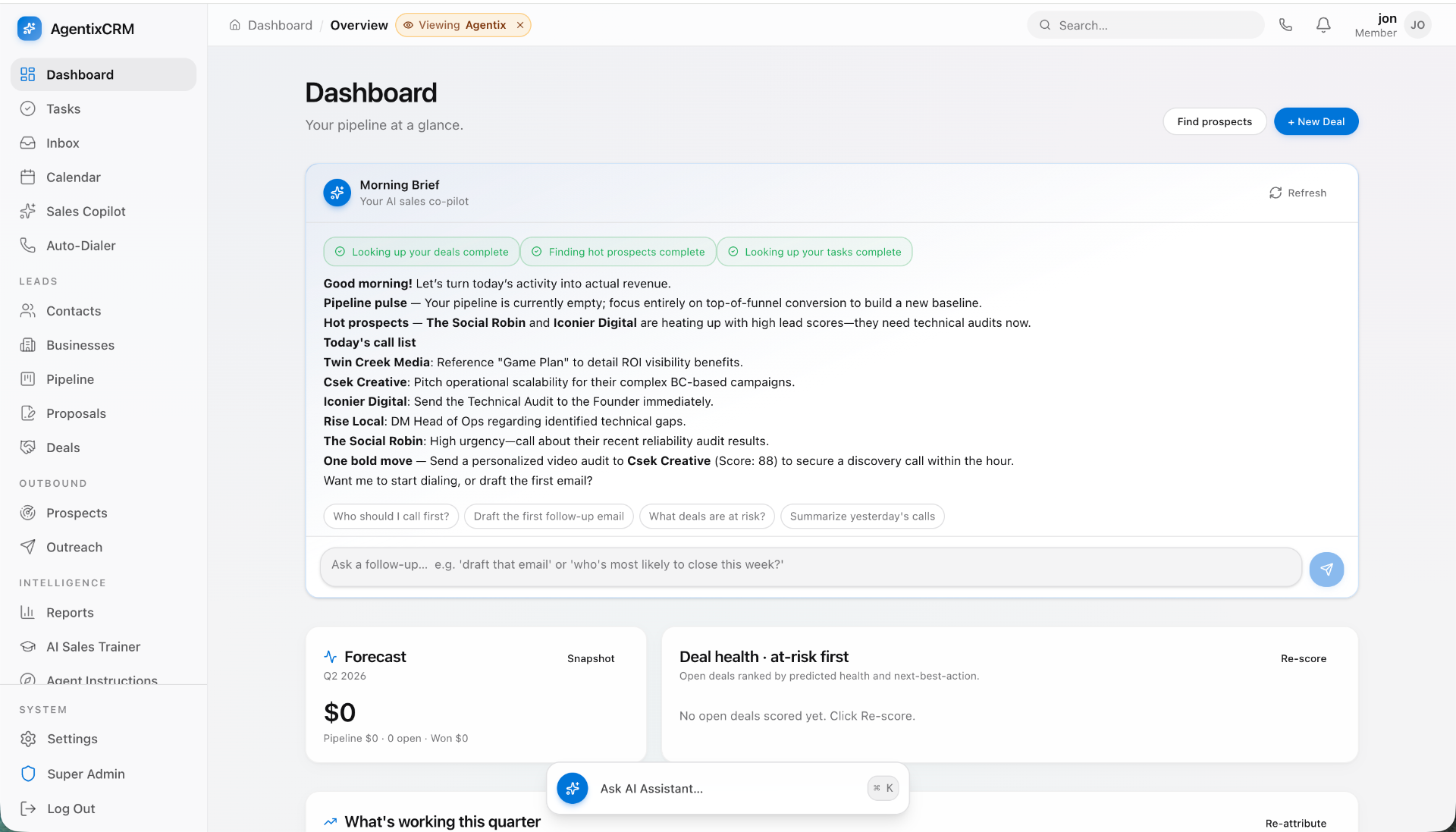
- Where it excels: Highly interactive, authenticated tools (CRM portals, internal operations dashboards, canvas tools) where public SEO is irrelevant.
Next.js (App Router + Server Components)
Maintained by Vercel, Next.js is the incumbent giant of full-stack React. With the introduction of the App Router, Next.js shifted from being a React framework with SSR bolted on to a deeply integrated server-first environment built around React Server Components (RSC).
In Next.js, components are server-rendered by default. Data fetching happens directly inside your UI components on a Node.js or Edge runtime, generating ready-to-view HTML before reaching the user's browser. Client-side interactivity is selectively opted into using the 'use client' directive.
- Rendering Mechanism: Hybrid (Static Site Generation, Server-Side Rendering, Streaming RSC, Client Hydration).
- Hosting Target: Vercel natively, or containerized Docker containers on AWS ECS, Render, or Railway.
- State Management: Split across server boundaries; relies heavily on server cache invalidation (
revalidatePath,revalidateTag) alongside client state. - Where it excels: Public-facing SaaS apps, marketplaces, high-traffic consumer web products, and content-driven platforms where programmatic SEO and link-unfurling are critical.
TanStack Start: The Type-Safe Challenger
Built by Tanner Linsley and the team behind TanStack Query and TanStack Router, TanStack Start is the modern alternative to the Next.js monoculture. Powered under the hood by Vite and Vinxi, TanStack Start is a full-stack framework designed for developers who want the benefits of server-side rendering and streaming without being forced into React Server Components.
Its core superpower is end-to-end type safety. TanStack Start treats routing, search parameter state, data loaders, and server functions as a unified, statically analyzed graph. If you change a route parameter or alter a backend mutation schema, your TypeScript compiler throws an error before the code ever reaches staging.
- Rendering Mechanism: SSR with client-side hydration, streaming, and granular data loaders.
- Hosting Target: Truly platform-agnostic (Node.js, Bun, Cloudflare Workers, AWS Lambda, Fastify).
- State Management: Deep integration with URL state and TanStack Query.
- Where it excels: Complex web applications that need both fast initial document delivery and dense, highly interactive UI with sophisticated URL-driven filtering and validation.
Head-to-Head Architectural Breakdown
To choose the right framework, founders and tech leads need to look past developer marketing and evaluate how each stack behaves under actual product workloads.
| Feature / Metric | Pure React (Vite) | Next.js (App Router) | TanStack Start |
|---|---|---|---|
| Initial HTML Response | Blank shell; requires JS execution | Rich, pre-rendered HTML document | Rich, pre-rendered HTML document |
| SEO / Indexing | Poor out-of-the-box (relies on bot JS execution) | Industry benchmark for SEO | Excellent (SSR + metadata loaders) |
| Routing Architecture | Client-side (React Router / TanStack Router) | File-system-based (App Router conventions) | Code-based or file-based type-safe routing |
| Type Safety | Requires manual API contract typing | Route params and server boundaries loosely typed | 100% end-to-end type safety across routes & loaders |
| Vendor Lock-in | Zero (deploy anywhere as static assets) | High friction outside Vercel ecosystem | Zero (runs on any modern JS runtime) |
| Monthly Hosting Floor | $1 - $15/month (S3 / Cloudflare) | $20 - $200+/month (Vercel Pro or Node clusters) | $5 - $50/month (Cloudflare Workers or VPS) |
| Initial Dev Velocity | Extremely high | Moderate (steep RSC learning curve) | High for experienced TypeScript developers |
1. Server-Side Rendering (SSR) and Hydration Overhead
When evaluating SSR, distinguish between Time to First Byte (TTFB) and Time to Interactive (TTI).
A pure React SPA delivers a sub-50ms TTFB because a CDN serves static assets directly from edge cache. However, on lower-powered mobile devices or spotty cellular connections, users stare at a blank white screen or loading skeleton for 1.5 to 3.5 seconds while the browser parses megabytes of JavaScript bundle before displaying anything useful.
Next.js solves this by generating the markup on the server. The user sees a fully styled page almost instantly. However, Next.js App Router applications often suffer from "hydration lag": the page looks interactive, but clicks on buttons or dropdowns register nothing for several hundred milliseconds until the client bundle finishes hydrating the DOM tree. If your team does not handle caching meticulously, dynamic server rendering can also cause TTFB to spike to 800ms+ on complex pages.
TanStack Start provides a balanced middle ground. It supports full SSR and streaming out-of-the-box, but avoids the dual-runtime abstraction overhead of React Server Components. Pages render on the server, hydrate cleanly on the client, and hand over control to TanStack Router's aggressive client-side caching mechanism.
2. Data Fetching and End-to-End Type Safety
Data fetching is where engineering teams spend 70% of their day-to-day development time. How your framework handles API interaction directly impacts your shipping cadence.
- In Pure React: You manage your own data fetching layer, typically via TanStack Query paired with an auto-generated client (like an OpenAPI or tRPC client). You must write plumbing to handle loading skeletons, error states, and background refetching. This requires more upfront setup, but the mental model remains dead simple.
- In Next.js: Data fetching happens directly inside asynchronous React Server Components using standard
fetch()with extended caching semantics. This eliminates client waterfalls for initial loads. However, sharing data back to interactive client components, handling optimistic UI updates, and orchestrating complex mutations requires navigating Server Actions,useOptimistic, and server tag revalidations. Many teams find this boundary debugging prone. - In TanStack Start: Data fetching is bound directly to route loaders. Loaders run on the server during initial load and on the client during in-app navigation. Because TanStack Start enforces full type inference, passing parameters from the URL into a loader and into your UI components is completely typed. If an API returns an optional field that you treat as required, your build will fail before it ever reaches a staging branch.
3. Hosting Infrastructure, Vendor Lock-in, and Operational Cost
For an early-stage startup, infrastructure costs should remain negligible. For a scaling scale-up, predictability is paramount.
Pure React SPAs are virtually free to host. At Envert, when we architect client-side dashboards for clients, we routinely deploy static builds to Cloudflare Pages or AWS CloudFront. You can easily serve 500,000 monthly active users for less than $20 a month in bandwidth.
Next.js is technically open-source, but its advanced features—such as incremental static regeneration (ISR), image optimization, streaming SSR, and edge middleware—are engineered natively for Vercel's proprietary edge platform. Running Next.js inside a self-hosted Docker container on AWS ECS, Google Cloud Run, or Railway is completely viable, but you assume responsibility for cache storage layers, cold starts, memory usage spikes, and complex cluster scaling. Furthermore, if you stay on Vercel, scaling past the Pro plan can lead to shocking monthly bills once high compute operations, image optimization limits, and team seat counts trigger enterprise tier pricing ($1,000 to $4,000+/month).
Want this shipped, not just read about?
Book a free scoping call. We'll map the smallest billable wedge of your idea and tell you honestly if we're the right team to build it.
Book a free scoping callSee what we've shipped →
TanStack Start avoids this completely by building on top of Vinxi and Nitro. It compiles seamlessly to static targets, standard Node servers, Cloudflare Workers, Fastify, or AWS Lambda without rewriting application logic. You retain full leverage over your infrastructure costs from day one.
The Founder's Decision Matrix: 3 Real-World Build Scenarios
Theory is cheap. Let’s look at three specific product builds we regularly consult on at Envert, detailing how stack selection plays out in real production environments.
Scenario 1: The B2B Enterprise SaaS Dashboard (Behind Authentication)
- Product Archetype: An AI-powered supply-chain analytics platform with team permissions, audit logs, and dynamic data tables.
- SEO Requirement: Zero. 99% of user interactions occur behind a secure login screen.
- The Right Pick: Pure React (Vite) + TanStack Router & Query
Why: Server-rendering authenticated dashboards adds architectural overhead with near-zero business return. When users log in, they expect instantaneous transitions between internal tabs, dense interactive tables, and local caching.
A Vite-powered React SPA allows your engineers to build against a clean, decoupled backend API (FastAPI, Go, or NestJS). You eliminate server-side session hydration problems, slash your frontend infrastructure bill to near-zero, and maintain a codebase that is straightforward for any mid-level React engineer to maintain without needing to master server component caching semantics.
Scenario 2: The Two-Sided Marketplace or Directory (Organic Traffic Engine)
- Product Archetype: A programmatic directory connecting commercial real estate buyers with regional brokers, featuring 150,000 indexed listings.
- SEO Requirement: Critical. Organic search engine discovery represents the entire top-of-funnel acquisition strategy.
- The Right Pick: Next.js (App Router)
Why: Here, Next.js remains the gold standard. Google's crawlers can technically execute JavaScript on client-rendered pages, but their crawl budgets are limited. If your page takes 3 seconds to render dynamic content via client-side API requests, search bots will index fewer pages per day, hampering organic ranking velocity.
Next.js allows you to prerender hundreds of thousands of listing pages statically, while utilizing Server Components to stream in real-time pricing and availability data. Its native image optimization pipeline automatically compresses, resizes, and converts broker gallery photos to WebP format, maintaining Core Web Vitals scores without third-party integrations.
Scenario 3: The High-Interactivity Full-Stack SaaS MVP
- Product Archetype: A collaborative project planning platform with real-time comments, deep nested URL filters, and an integrated public blog.
- SEO Requirement: Moderate (public marketing pages and blog require indexing; the core app requires speed and URL-driven state).
- The Right Pick: TanStack Start
Why: This application demands rich server-side metadata for public links alongside complex, highly reactive internal UI. TanStack Start shines when URL search parameters (like ?view=kanban&filter=high-priority&assignee=123) drive critical UI states.
By validating and typing search parameters natively at the router level, your team avoids fragile useEffect sync loops that plague traditional React apps. Furthermore, you can host the entire full-stack app on low-cost edge platforms like Cloudflare Workers, keeping cold starts sub-10ms and operating expenses negligible while maintaining instant SSR for your public routes.
The Real Cost Breakdown: Initial Velocity vs. Maintenance Debt
When evaluating a build budget, product leaders often prioritize initial development velocity and overlook the 24-month total cost of ownership (TCO). Let’s look at real-world benchmarks from digital product builds:
1. Development Velocity & Engineering Labor
- Pure React (Vite): A standard 8-to-12 week MVP build for an interactive SaaS tool typically runs between $25,000 and $50,000 with an experienced agency or dedicated engineering team. The standard React component model is universal, hiring talent is effortless, and tooling bugs are rare.
- Next.js (App Router): Because engineers must constantly juggle the mental model of
'use client'boundaries, server action serialization, and caching headers, development of complex applications often takes 15–25% longer. Expect an MVP budget of $35,000 to $65,000. However, if you need marketing site integration and programmatic SEO built directly into the app, you save the cost of maintaining a separate CMS frontend. - TanStack Start: Currently, TanStack Start requires a strong baseline understanding of modern TypeScript, TanStack Query, and functional design patterns. While build velocity is high once configured, the ecosystem is newer than Next.js. Expect a comparable timeline to Next.js, but with significantly lower bug rates related to data-type mismatches post-launch.
2. Infrastructure & Hosting Run-Rate (At 50,000 Monthly Active Users)
- Pure React SPA: Deployed on AWS S3/CloudFront or Cloudflare Pages. Compute cost: $5 to $20/month.
- Next.js on Vercel: Base Team Plan ($20/seat/month) + Fast Data Transfer + Serverless Function Execution + Image Optimization. Realistic monthly spend: $120 to $450/month.
- TanStack Start on Cloudflare Workers / Node VPS: Serverless compute or a pair of mirrored Hetzner/DigitalOcean droplets. Realistic monthly spend: $15 to $60/month.
At Envert, we prioritize architecture that protects our clients' operating runway. Building your core authenticated SaaS app inside an expensive, high-overhead server-rendering environment when a clean client-side architecture would perform better is an unforced error we help founders avoid.
Technical Feature Checklist: Which Fits Your Roadmap?
Review this functional checklist before signing off on your engineering specifications:
Choose Pure React (Vite) if:
- Your product sits behind an authentication gate (B2B SaaS, operations portal, accounting software).
- You already have a dedicated backend API service (Node, Python, Go, Ruby on Rails) built by a separate team.
- You want absolute freedom from hosting vendors and zero infrastructure maintenance overhead.
- You need junior-to-mid-level engineers to contribute to the UI immediately without mastering server-component semantics.
- Offline support or PWA (Progressive Web App) capabilities are on your 12-month roadmap.
Choose Next.js (App Router) if:
- Organic search (SEO), Core Web Vitals, and programmatic page creation are the lifeblood of your growth model.
- You are building a consumer marketplace, social discovery platform, or publication.
- You want your team to build full-stack features (UI, database queries, API endpoints) in a unified, single repository without maintaining a standalone API server.
- You are comfortable committing to the Vercel hosting platform or have an experienced DevOps engineer capable of maintaining containerized Docker instances.
- Rich social media previews (Open Graph image dynamic generation) are required for core user sharing loops.
Choose TanStack Start if:
- You want modern SSR performance and SEO capabilities without being locked into Vercel's proprietary ecosystem.
- Your application features dense, filter-heavy screens where complex URL parameters drive the application state.
- Your engineering culture demands rigorous, end-to-end type safety from server queries down to UI components.
- You plan to deploy on ultra-fast, cost-effective serverless runtimes like Cloudflare Workers or Bun.
- You already rely heavily on TanStack Query, TanStack Table, or TanStack Form in your existing product ecosystem.
The Engineering Verdict: How to Decide Today
There is no single "best" web framework in modern software engineering—only architecture that aligns with your business model and team constraints.
If your startup is building an authenticated enterprise SaaS, an AI agent dashboard, or an internal workflow portal, do not overcomplicate your life: build a pure React SPA with Vite. It is battle-tested, lightning-fast to iterate on, and virtually free to host.
If your startup is building a public-facing, SEO-first business model where search rankings directly drive revenue, Next.js remains the most pragmatic enterprise choice, provided your team sets up caching correctly and respects server-client execution boundaries.
If you want the cutting edge of type-safe, full-stack web development with complete infrastructure independence, TanStack Start is the framework to watch and adopt for greenfield builds.
Build Your Next Web App With Envert
Navigating architectural trade-offs, evaluating hosting footprints, and shipping high-performance software requires more than theoretical advice—it requires an engineering team that has built and scaled production applications.
Envert is a US-based digital product studio that designs, builds, and launches custom software end-to-end. Whether you are launching a greenfield SaaS MVP, developing a mobile application, scaling an internal tool, or integrating proprietary AI features into your existing workflow, our senior engineering team builds robust, scalable applications that protect your capital and accelerate your time-to-market.
Stop guessing on your architecture. Book a free 30-minute scoping call with Envert today to discuss your product roadmap, review your technical stack options, and receive a concrete roadmap for your build.
Frequently asked questions
Can I convert a pure React SPA to Next.js or TanStack Start later?+
Yes, but it is rarely seamless. Moving from a client-side SPA to an SSR framework requires refactoring browser-only globals (like `window` or `localStorage`), redesigning state management around server boundaries, and restructuring your data-fetching architecture. Plan for roughly 2 to 4 weeks of dedicated engineering time for an average MVP migration.
Is Next.js really vendor-locked to Vercel?+
Not strictly locked, but heavily optimized for it. You can build Next.js applications into standard Docker containers and deploy them on AWS, Google Cloud, or Railway. However, features like image optimization, edge middleware, and granular ISR caching require manual configuration and custom caching backends to match Vercel's native developer experience.
Does TanStack Start have enough production stability for a commercial MVP?+
TanStack Start is built on top of battle-tested foundations: TanStack Router, TanStack Query, and Vinxi (powered by Vite and Nitro). While the framework itself reached general availability more recently than Next.js, its underlying routing and state primitives are already running in high-scale enterprise applications globally.
Do I need server-side rendering (SSR) if my app requires users to log in?+
In almost all cases, no. Authenticated SaaS apps, customer portals, and internal tools do not benefit from SEO, and modern client-side bundlers like Vite deliver instant subsequent navigation speeds. SSR for authenticated dashboards often adds unneeded infrastructure complexity without improving user satisfaction.
What is the fastest stack to build an MVP on a tight timeline?+
For an interactive SaaS tool or dashboard, a pure React SPA with Vite and a dedicated backend (e.g., Supabase, Node, or Python) offers the quickest path to market. If your MVP relies fundamentally on public search traffic or programmatic landing pages, Next.js remains the fastest option due to pre-built templates and hosting automations.